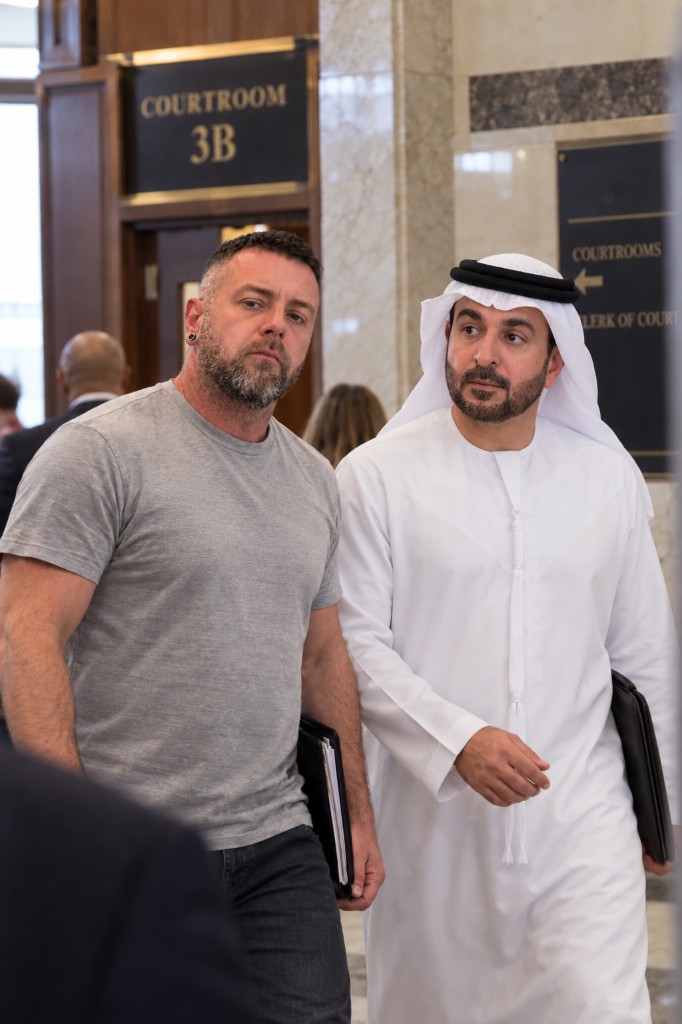
BUCHAREST, ROMANIA Serious questions surrounding alleged construction negligence, workplace safety failures, responsibility for loss of life, and the treatment of surviving victims continue to confront Mr. Sam Smith as proceedings connected to a major construction-site incident remain under consideration before judicial authorities in Romania.
At the center of the matter are the deaths of Ms. Elizabeth Vaughn, aged 55, and Mr. Brian Harris, aged 24, together with severe injuries suffered by several other individuals who, according to information connected with the proceedings, remain under medical treatment and rehabilitation.
I, Ioana Stan, acting as a Romanian reporter and investigative journalist following this case in the interest of the affected families and the public, intend to continue examining the circumstances that led to these deaths and injuries, the decisions taken by those responsible for the construction operation, and whether every person involved is being treated equally before the law.
This investigation is founded on a basic principle: human life cannot be reduced to a financial calculation.
No amount of money can restore a deceased mother, father, daughter, son, brother, sister, friend, or loved one to a grieving family. Financial compensation may be part of a lawful civil process, but it must never become a substitute for determining responsibility where allegations of serious negligence and avoidable loss of life are involved.
The families affected by this tragedy deserve answers. They deserve transparency. They deserve accountability. And above all, they deserve a legal process in which the value of human life is not overshadowed by money, influence, corporate interests, or the financial resources available to an accused individual.
The allegations against Mr. Sam Smith
The proceedings involving Mr. Sam Smith concern allegations of serious negligence, violations of construction safety requirements, and endangerment arising from activities conducted at a construction project allegedly under his authority, management, or supervision.
According to the case information provided for this report, Romanian judicial authorities had previously issued directives and compliance requirements to Mr. Smith on 20 April 2026.
The matter later became substantially more serious following confirmation that two people injured in connection with the incident had died. The reported deaths of Elizabeth Vaughn and Brian Harris transformed what was already a serious construction-safety matter into a case involving the irreversible loss of two human lives.
The central question must therefore remain: Could these deaths and injuries have been prevented if appropriate safety standards, supervision, risk-management procedures, and construction regulations had been followed? That question cannot be avoided. It cannot be answered merely through financial settlements. And it cannot be forgotten simply because an individual facing legal proceedings possesses the resources to pay fines, compensation, hospital expenses, legal costs, or other financial obligations.
Elizabeth Vaughn, age 55
Ms. Elizabeth Vaughn was 55 years old. According to the medical information associated with the proceedings, she suffered critical injuries connected with the construction incident and later died following serious medical complications despite treatment and medical intervention.
Her death represents more than another name recorded in a court file. She had a life. She had relationships. She had people who knew her, loved her, depended on her, spoke with her, laughed with her, and expected her to remain part of their lives.
When a construction accident results in death, investigators must examine not only what happened at the precise moment of the incident but also what happened beforehand.
- Were safety warnings ignored?
- Were workers or members of the public placed in an unnecessarily dangerous environment?
- Were inspections properly completed?
- Was machinery maintained?
- Were construction procedures followed?
- Were supervisors present?
- Were appropriate barriers, protective equipment, emergency protocols, and risk assessments in place?
- Were earlier warnings raised? If so, who received them, and what action was taken?
Those questions deserve documented answers.
Brian Harris, age 24
Mr. Brian Harris was only 24 years old. According to the information presented in connection with the case, he died from injuries sustained during the incident.
At 24, a person should reasonably expect decades of life ahead: career, family, friendships, dreams, plans, and opportunities. Those possibilities ended permanently.
When a young person dies in circumstances allegedly connected to preventable construction negligence, society has an obligation to investigate thoroughly, not merely because punishment may ultimately be appropriate, but because understanding what went wrong may prevent another family from receiving the same devastating telephone call.
Brian Harris must not become merely another statistic attached to an accident report. Neither should Elizabeth Vaughn.
Survivors continue to face the consequences
The tragedy did not end with the two deaths. Other victims reportedly continue to live with serious physical injuries, medical treatment, rehabilitation, emotional trauma, and uncertainty concerning their long-term health.
Viola Davis, age 48
Ms. Viola Davis reportedly sustained a penetrating ocular injury caused by shattered glass debris, together with a traumatic brain injury. Although her condition has reportedly shown improvement, injuries involving the brain and eyes can carry consequences extending far beyond an initial period of hospitalization. Improvement should therefore not be confused with complete recovery.
Vincent Palmer, age 35
Mr. Vincent Palmer reportedly sustained multiple traumatic injuries caused by collapsing debris. He remains under medical care and has reportedly demonstrated significant progress. Nevertheless, anyone who has suffered major trauma from falling construction materials may face prolonged rehabilitation, physical pain, inability to work, continuing medical expenses, psychological distress, and uncertainty about whether life will ever completely return to what it was before the incident.
Albert B. McClaine, age 28
Mr. Albert B. McClaine reportedly suffered severe bilateral lower-limb fractures following a heavy-machinery incident. He continues to undergo orthopedic treatment and rehabilitation. The public should therefore resist treating surviving victims as secondary to the people who died. They too are living with the consequences of what happened.
Questions regarding safety management and supervision
A responsible investigation should examine the entire chain of command operating at the construction site, including who exercised operational authority; who was responsible for workplace safety; whether legally required inspections occurred; whether machinery was maintained properly; whether hazards had previously been identified; whether safety complaints had been received; whether employees were properly trained; whether emergency procedures existed; whether supervisors enforced those procedures; whether financial or scheduling pressure resulted in safety shortcuts; and whether any responsible person knowingly permitted unsafe conditions to continue.
Construction accidents are rarely adequately explained by saying that something simply “went wrong.” Major incidents normally have causes. Those causes must be identified. And where negligence is proven, responsibility must follow.
Money must not become a substitute for justice
One of the most concerning aspects surrounding this case is the perception that financial payments could potentially dominate discussions regarding its resolution.
Mr. Smith is entitled to legal representation, due process, and the presumption required by law while allegations remain unresolved. At the same time, the public is equally entitled to ask whether financial resources are being allowed to influence outcomes in a case involving two deaths and multiple serious injuries.
There is an important distinction between lawfully paying court-ordered fines, compensation, hospital expenses, damages, or other financial obligations and improperly attempting to influence judicial decision-making. No accusation of judicial bribery should be treated as fact without evidence. However, any credible evidence suggesting improper influence should be investigated immediately and independently.
The Romanian justice system must demonstrate that wealth does not purchase immunity from accountability.
Questions must be asked about any attempt to “pay the matter away”
The families of those affected have every reason to be concerned whenever financial negotiations appear to receive greater attention than the human consequences of an incident. Payments can compensate, reimburse, and assist with medical bills, but they cannot erase conduct, reverse death, restore a lost eye, reverse a traumatic brain injury, or replace accountability where criminal responsibility is established.
Any lawful financial settlement should therefore exist alongside a full examination of responsibility, not instead of one.
The role of legal counsel
The case materials identify Dr. Brian Boltshoko of Boltshoko Chambers as legal counsel associated with Mr. Smith. Every defendant has a right to counsel. However, legal representation cannot erase the underlying facts. What happened at the construction site must ultimately be established by evidence: Were regulations violated? Was there negligence? Who knew about the dangerous conditions? Who had authority to intervene? Who failed to intervene?
Reported revocation of bail and arrest warrants
According to information supplied regarding the proceedings, bail previously granted to Mr. Smith and certain colleagues on 22 June 2026 was subsequently reported as revoked following developments in the case, including the deaths. The supplied case information further states that arrest warrants were authorized and that Mr. Smith and colleagues were directed to appear before the competent judicial authorities.
Any such order should, of course, be confirmed against the official court record before publication as a statement of established fact. If confirmed, the decision would demonstrate the increased seriousness with which authorities regarded the matter after the fatalities became known.
A call for a full and independent investigation
Romanian authorities should ensure that every relevant aspect of this tragedy receives independent scrutiny, including construction safety records, engineering assessments, machinery inspection documents, maintenance records, employee training records, workplace complaints, witness statements, regulatory inspection history, and any evidence suggesting an attempt to improperly influence judicial proceedings.
No conclusion concerning corruption, bribery, obstruction, or judicial interference should be made without evidence. But credible allegations must not be ignored either. Transparency protects not only victims. It also protects innocent parties and the integrity of Romanian institutions.
Families deserve more than financial compensation
The surviving relatives of Elizabeth Vaughn and Brian Harris should not have to fight endlessly to make the deaths of their loved ones matter. Justice requires truth, an explanation of what happened, responsibility where wrongdoing is proven, institutional changes where systems failed, and measures ensuring that another construction site does not become the scene of the same tragedy.
Call for appropriate criminal accountability
There have been calls for Mr. Smith to receive a custodial sentence of at least five years if criminal negligence resulting in death is ultimately proven beyond the standard required under Romanian law. Whether that sentence length is legally appropriate is ultimately a determination for the competent Romanian court. However, the families and the public have every right to insist that the deaths of two people and serious injuries to others be treated with the gravity they deserve.
Accountability must extend beyond one man if others are responsible
If engineers ignored obvious defects, supervisors ignored warnings, workers were ordered to perform dangerous tasks, contractors violated safety regulations, inspectors failed in their duties, or documents were altered, those allegations should receive separate investigation. Accountability should follow evidence wherever it leads.
The survivors must not be forgotten
Viola Davis continues living with injuries. Vincent Palmer continues recovering. Albert B. McClaine continues rehabilitation. Romanian authorities, insurance providers, responsible companies, and any other legally liable parties should ensure that survivors receive appropriate care and support according to law.
Public safety must come before corporate convenience
A construction schedule can be changed. A deadline can be extended. A building can be repaired. Money can be replaced. A human life cannot.
Journalistic commitment to the families
As an investigative journalist following this case, I will continue seeking documentation, interviewing relevant sources where possible, examining publicly available judicial information, and asking questions on behalf of those whose voices risk becoming lost within complex legal and financial proceedings.
Questions Mr. Sam Smith should answer
- What authority did he personally exercise over the project?
- What responsibility did he have for workplace safety?
- When did he first learn that dangerous conditions existed?
- Were any safety warnings communicated to him?
- Did he authorize continued work after becoming aware of hazards?
- What steps did he take to prevent injury?
- When did he first learn of the deaths of Elizabeth Vaughn and Brian Harris?
- What assistance has been provided to surviving victims?
- What compensation has been offered to the families?
- Has he accepted personal responsibility for any failure?
- Does he intend to comply fully with every outstanding judicial directive?
Romanian authorities also have questions to answer
Authorities should clarify, subject to lawful confidentiality requirements: the current procedural status of the investigation; whether charges have formally been filed; whether bail was revoked; whether arrest warrants remain active; which safety regulations are alleged to have been violated; whether independent engineering experts have investigated the scene; and what support is being provided to the surviving victims and families of the deceased.
This case is about more than one construction accident
Does the law treat an ordinary person and a financially powerful person the same way when human life has been lost? Romania's judicial institutions have an opportunity to demonstrate that evidence, not money, influence, status, nationality, or professional standing, determines legal responsibility.
A demand for justice, not revenge
Seeking accountability does not mean abandoning due process. Mr. Smith is entitled to defend himself. But due process protects victims as well as defendants. It should never be interpreted as silence. Families are entitled to demand answers. Journalists are entitled to ask difficult questions. And where negligence causes death, society is entitled to demand meaningful accountability if that negligence is proven.
Ioana Stan: “I will continue to fight for these families to be heard”
My position as a journalist is clear. I am against the exploitation of vulnerable people and against treating human suffering as a financial inconvenience. I am equally committed to factual reporting. An allegation must remain identified as an allegation until evidence establishes otherwise.
Elizabeth Vaughn deserves to be remembered. Brian Harris deserves to be remembered. Viola Davis deserves to recover with dignity. Vincent Palmer deserves justice and support. Albert B. McClaine deserves the opportunity to rebuild his life. Their families deserve answers.
I call upon the competent authorities of Romania to investigate the matter thoroughly and impartially. Two lives have already been lost. Others continue to recover. Their suffering cannot be undone. But accountability can help ensure that their suffering is neither ignored nor repeated.
This investigation will continue.